






Introduction
Over the last two decades, the boundaries between entertainment, technology, and health have blurred in fascinating ways. One of the most innovative examples of this fusion is the rise of fitness and exercise games. Once seen as niche or even gimmicky, fitness-focused video games have steadily grown into a major category within the gaming and health industries. They not only provide entertainment but also promote physical activity, encourage healthier lifestyles, and make exercise more accessible to millions of people worldwide.
As sedentary lifestyles and digital distractions continue to dominate modern life, fitness games have offered an alternative that combines the excitement of gaming with the benefits of physical movement. From motion-sensing consoles like the Nintendo Wii to modern virtual reality platforms and smartphone apps, fitness games have become a powerful tool in encouraging people of all ages to exercise. The rise of this genre is not just a story of gaming innovation—it is also a reflection of changing cultural attitudes toward health, wellness, and interactive technology.
The Origins of Fitness Games
The concept of combining video games with physical activity is not entirely new. In fact, early attempts at fitness gaming date back to the 1980s and 1990s with devices like the Power Pad for the Nintendo Entertainment System and arcade dance games like Dance Dance Revolution. While these were limited in scope, they planted the seeds for what would later become a major gaming trend.
It was the release of the Nintendo Wii in 2006 that marked a turning point. The Wii introduced motion-sensing controllers that allowed players to swing, punch, and move their bodies in ways that mimicked real physical actions. Games like Wii Sports and Wii Fit showed that gaming could be both fun and physically engaging. Wii Fit, in particular, with its balance board and range of fitness activities, became a global phenomenon. Millions of households adopted it, not just as a game but as a family-friendly fitness solution.
Evolution into Mainstream Culture
As fitness gaming gained popularity, other companies began exploring similar innovations. Microsoft’s Xbox Kinect and Sony’s PlayStation Move expanded the motion-gaming concept, while mobile technology brought fitness apps and gamified workouts to smartphones. Suddenly, exercise was no longer limited to gyms or fitness classes—it could be integrated into everyday life through interactive digital platforms.
Fitness games also benefited from the growing cultural emphasis on wellness. As awareness of obesity, sedentary lifestyles, and mental health issues increased, fitness gaming found a place in public discourse as a creative solution. Parents saw it as a way to get children moving, while adults viewed it as a convenient option for home exercise.
Virtual Reality and the New Era of Fitness Games
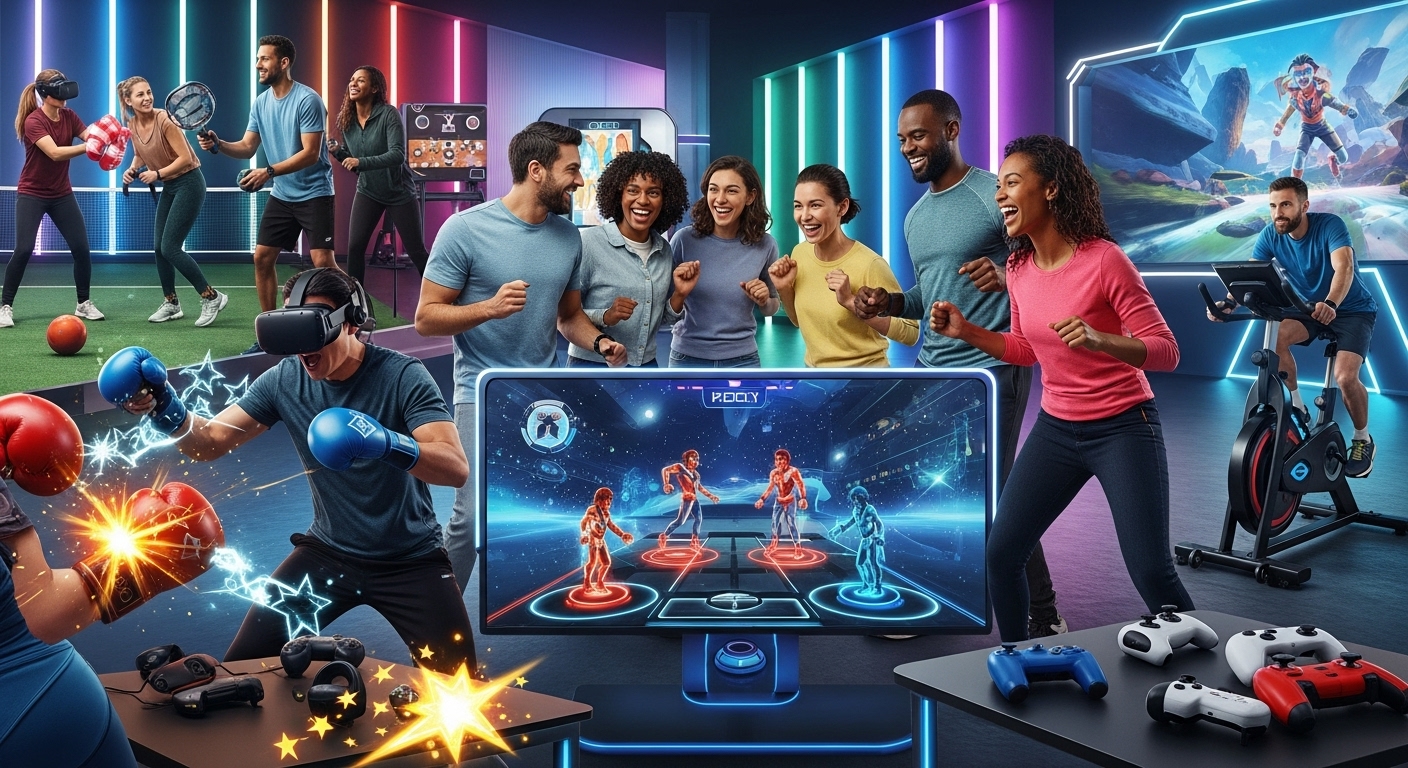
The biggest leap forward in recent years has come from virtual reality. VR platforms such as the Oculus Quest, HTC Vive, and PlayStation VR have transformed fitness games into fully immersive experiences. Players are no longer just standing in front of a screen swinging a controller—they are transported into virtual environments where exercise becomes part of the adventure.
Games like Beat Saber, Supernatural, and FitXR combine rhythm-based gameplay, high-intensity movements, and immersive visuals to create workouts that feel more like fun than exercise. Instead of lifting weights in a gym, players might be slashing through blocks with virtual lightsabers, boxing opponents in a digital arena, or dancing to high-energy music. The immersive nature of VR fitness games makes workouts more engaging and helps users lose track of time, turning exercise into an enjoyable activity rather than a chore.
Accessibility and Inclusivity
One of the most important aspects of fitness games is their accessibility. Not everyone has the time, resources, or comfort level to go to a traditional gym. Fitness games provide an alternative for people who prefer to exercise in private, cannot afford gym memberships, or need more flexible schedules.
Additionally, fitness games can be tailored to different ability levels. Many offer customizable intensity options, allowing players to start at a beginner level and gradually progress. This inclusivity means that fitness games appeal to a wide demographic, from children to older adults, and from casual exercisers to serious fitness enthusiasts. Some games even include adaptive features for players with disabilities, further expanding accessibility.
The Psychology of Gamification in Fitness
One reason fitness games have been so effective is the psychological power of gamification. Gamification uses game-like elements such as points, levels, achievements, and rewards to motivate behavior. In fitness games, players earn scores, unlock new challenges, or compete against friends, which creates a sense of accomplishment and fun.
Traditional workouts can often feel repetitive or discouraging, especially for beginners. Gamification provides immediate feedback and a sense of progress that keeps people motivated. The challenge of beating a high score or reaching the next level adds excitement and encourages consistency. Over time, this can lead to the formation of healthier habits without the usual resistance that comes with exercise.
Fitness Games and Social Connection
Another factor contributing to the rise of fitness games is their ability to connect people socially. Multiplayer modes, online leaderboards, and fitness communities allow players to exercise together, even from different locations. This sense of camaraderie and competition can be highly motivating.
For example, VR fitness platforms often include live classes led by instructors, where participants from around the world can join in real time. Mobile fitness games allow friends to share progress and challenge each other. This blend of social interaction and physical activity creates a unique experience that is both fun and supportive.
Impact on Health and Wellness
The health benefits of fitness games are increasingly recognized by researchers and health professionals. Studies have shown that active video games can improve cardiovascular fitness, coordination, flexibility, and even mental health. While they may not completely replace traditional workouts for athletes or fitness enthusiasts, they provide a valuable alternative for people looking to stay active in a fun and engaging way.
Beyond physical health, fitness games can also support mental well-being. Exercise is known to reduce stress, improve mood, and boost energy levels, and when combined with the immersive enjoyment of gaming, it becomes even more effective. Fitness games can be particularly beneficial for individuals who struggle with motivation, anxiety, or boredom in traditional workout settings.
Fitness Games in Education and Rehabilitation
The influence of fitness games has extended beyond homes and gyms into education and healthcare. Schools have incorporated active gaming into physical education classes as a way to engage students in physical activity. Hospitals and rehabilitation centers use fitness games as part of therapy programs, helping patients recover mobility, balance, and strength in enjoyable ways.
For patients recovering from injuries or surgeries, traditional rehabilitation exercises can feel monotonous. Fitness games transform these exercises into interactive activities, making them more enjoyable and improving adherence to treatment plans. This has opened new possibilities for how technology can support health care and recovery.
The Business and Industry Perspective
The fitness gaming market has become a major industry in itself. With the growth of VR, mobile apps, and motion-sensing technology, companies are investing heavily in fitness-oriented gaming experiences. Subscription services, in particular, have become popular, offering users access to a library of workout games and programs for a monthly fee.
This trend has also attracted partnerships between fitness companies and game developers. For example, traditional fitness brands have collaborated with tech companies to create interactive platforms that blend exercise equipment with digital gaming. Stationary bikes, rowing machines, and treadmills are now being paired with screens that allow users to race through virtual environments or compete against others online.
Challenges and Criticisms
Despite their many benefits, fitness games are not without challenges and criticisms. Some critics argue that while fitness games encourage movement, they may not provide the same intensity or effectiveness as traditional exercise. For example, a VR boxing game may not replicate the full workout of a real boxing class. Others worry that fitness games could be used as a substitute for more comprehensive physical activity rather than a supplement.
Another concern is the accessibility of technology. High-quality VR systems and gaming consoles can be expensive, limiting access for some individuals. Additionally, fitness games require space for movement, which may not be available in all households. These factors highlight the need for continued innovation to make fitness games more affordable and inclusive.
The Future of Fitness and Exercise Games
Looking ahead, the future of fitness games is full of potential. Advances in virtual reality, augmented reality, artificial intelligence, and wearable technology will continue to enhance the fitness gaming experience. Imagine AI-driven workouts that adapt in real time to a player’s performance, or augmented reality games that turn everyday environments into interactive fitness challenges.
Wearable fitness trackers will also play a larger role, integrating with games to provide real-time biometric feedback such as heart rate, calories burned, and movement efficiency. This data can help personalize workouts, making them more effective and tailored to individual goals.
The potential for cross-industry collaboration is also significant. Fitness games may increasingly partner with healthcare providers, schools, and gyms to create holistic solutions that blend physical activity with digital engagement. As society continues to seek innovative ways to address health challenges, fitness gaming is likely to play an even larger role.
Conclusion
The rise of fitness and exercise games reflects a broader cultural shift toward interactive, technology-driven solutions for health and wellness. What began as a niche experiment with motion controllers has evolved into a global phenomenon that spans consoles, mobile devices, and virtual reality platforms. Fitness games have proven that exercise can be fun, accessible, and deeply engaging when combined with the excitement of gaming.
While challenges remain in terms of accessibility, cost, and effectiveness, the benefits of fitness games are undeniable. They provide a valuable alternative to traditional exercise, motivate users through gamification, foster social connections, and even support education and rehabilitation. Most importantly, they have changed the way people view fitness, showing that staying active does not have to be a chore—it can be a game.
As technology continues to evolve, the possibilities for fitness and exercise games will only expand, offering new ways to inspire healthier lifestyles around the world. The rise of this genre is not just about playing games; it is about transforming the way we move, connect, and live.